 Canada

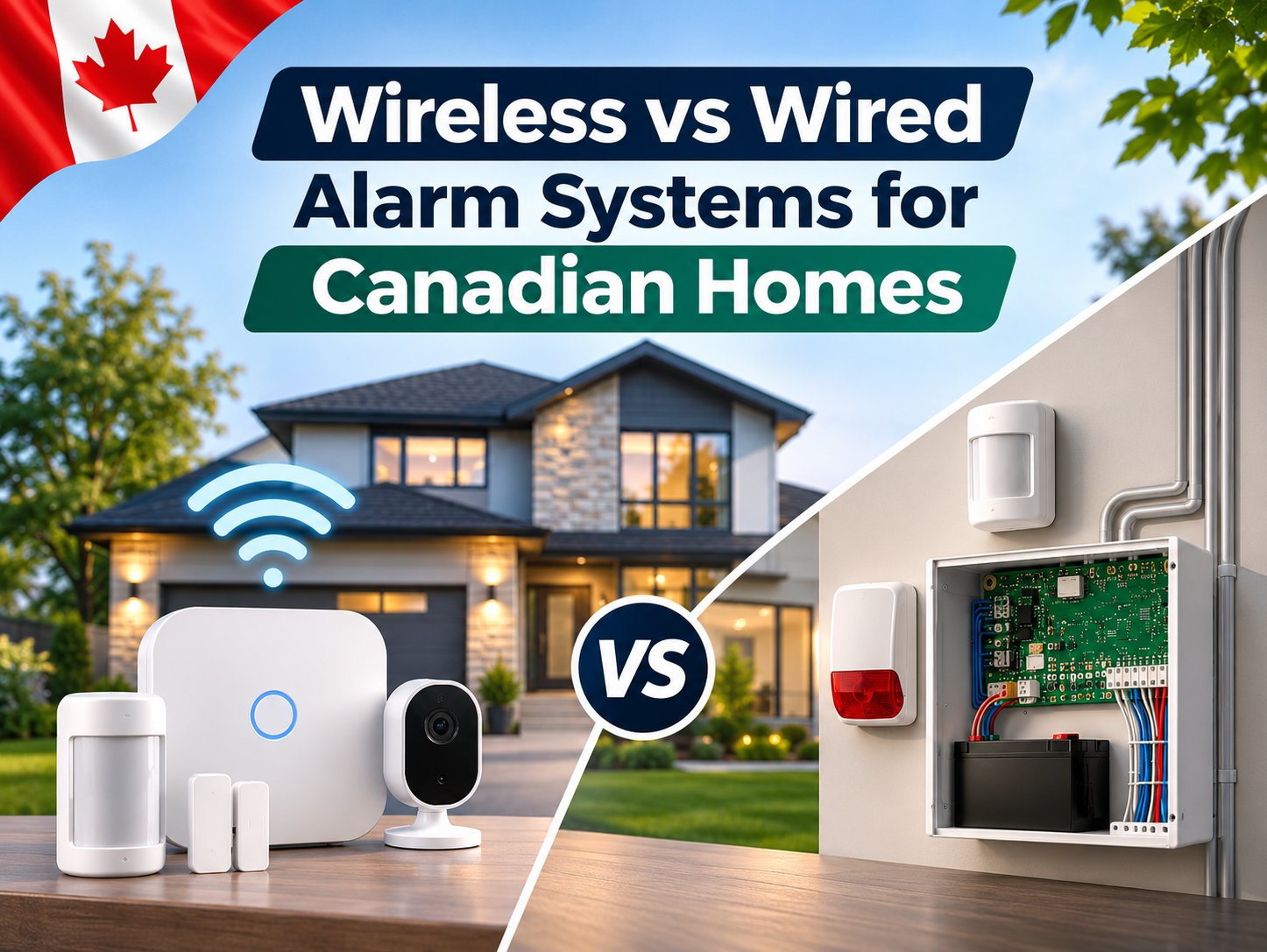
Should you ask 10 people if a wired or wireless alarm system is better, you'll get 10 positive responses, most likely depending on which one they installed. The truth is, it depends on your home. Whereas the choices are different for a brick bungalow from the 1960s, and a new-build townhouse with open walls, the condo on the 20th floor adds another set of variables that most comparison articles don't address, Canadian winters.
Whether or not you choose a wired or wireless alarm system, this guide breaks them down the way a Canadian homeowner would need to: by type of home, climate, maintenance and cost. If you are new to the subject, you should understand how home alarm systems work, or even view all the types of home alarm systems to comprehend where wired and wireless systems fit into all of.
Quick Answer
- Use Wireless when you live in an existing home, condo or rental units, need a quick installation or plan to relocate or expand.
- Consider Wired if you are constructing or remodeling an open-walled home, or you have a larger house and do not want to deal with battery powered sensors.
- Choose hybrid If you have some of your home rebuilt or you would like wired reliability in select areas and wireless anywhere else.
What's the Difference?
Low-voltage cable is used with wired alarm systems to link each sensor to the control panel. Power and signals travel through those cables, so the sensors themselves don't need batteries. The control panel has a back-up battery in case of power outages.
Wireless alarm systems operate by transmitting the alarm signal between the alarm panel and the sensors. All sensors operate independently on their own batteries and the panel keeps track of them and alerts you to when one is low or silent.
Both can be professionally monitored, both can communicate via cellular or Internet to outside world and both can be armed from a phone app. The only difference is the type of connection between the sensors and the panel.
Wired vs Wireless at a Glance
| Factor | Wired | Wireless |
|---|---|---|
| Installation | Invasive, cable runs through walls and floors | Quick, often no drilling |
| Best time to install | During construction or renovation | Anytime |
| Sensor batteries | None | Required, replaced periodically |
| Signal reliability | Very steady | Good, but depends on walls and distance |
| Expanding later | Harder, may need more cable | Easy, add a sensor in minutes |
| Taking it with you | Rarely practical | Often possible |
| Typical upfront cost | Higher installation labour | Higher equipment cost, lower labour |
| Best for | New builds, large homes, renovations | Existing homes, condos, rentals |
How Canadian Homes Change the Answer
Older Homes (Finished Walls)
If installing new cable in an older house with plaster walls, finished basements, and insulated ceilings, opening walls, patching, and repainting are likely some of the things you will need to do. This expense can push the decision towards wireless or hybrid. There's an exception to this: major renovations, in which walls are open and wiring is straightforward.
New Builds and Renovations
Running cable is cheap and tidy with the studs exposed. This is where wired or hybrid systems are most appropriate and it is typically better to make a decision before the drywall is installed, as it is more difficult to install wiring once the drywall is in place.
Condos and Apartments
Concrete floors and walls are a great cable and radio nuisance. In most condos, drilling may be limited and the majority of condo owners and renters opt to go wireless. A repeater or other locations may be necessary for a sensor on the other end of a thick concrete wall, or if the equipment is in the middle range or below.
Larger Detached Homes
For larger houses, this distance is important. Wireless sensors might require repeaters for a large home or a separate garage, but wired sensors are not affected by distance. A hybrid system is used for this reason by many larger properties.
Basements, Garages, and Outbuildings
Detached buildings, metal doors and foundation walls block wireless signals. A wireless sensor can be installed in a completed basement or garage, and it may not work; Wired sensors can be installed anywhere in a completed basement or garage, and they will work, no matter. Before determining the location of sensors, test signal strength.
Winter Performance: A Canadian Factor
The difference between the two in practice is most pronounced in the cold weather:
- Wired Sensors don't have a battery that would weaken in cold weather, so they're not that affected.
- Wireless Sensors run on batteries and colder temperatures result in reduced battery performance. The most vulnerable areas are unheated areas like a garage, shed or cold-room door. Unlike an alkaline battery, lithium batteries are more suited to colder weather and many sensors used for professional use are designed with that in mind.
- Power outages are common in winter storms. Both types require the backup battery of the control panel which should be tested before winter; monitored systems should have cell communication, so if the internet goes out, the alarms will be able to report back.
A practical routine: Prior to winter, test the backup battery of the panel and any low battery alerts for wireless sensors, particularly outdoor sensors.
Reliability and Security
So are Wired More Reliable?
Wired systems are more reliable and do not suffer from radio interference. They also are not dependent on sensor batteries. The weak point is, the cable itself – if damaged or cut, a sensor can be affected – and panels watch for tampering – and good installers hide the control panel and wiring.
Is it Possible to Jam or Hack Wireless Systems?
That's a pretty good question. The best wireless alarm systems will have encrypted communications and monitor each and every device, warning the alarm panel if a device fails to report. Low cost equipment is more susceptible to interference. Having proven equipment and properly setting it up is more important than the choice of wireless versus wired.
The interference and the Signal Strength.
Although the typical household appliance will not normally cause a problem, building materials do. Signals can be weakened by thick masonry, metal and concrete. Using a professional, the signal strength can be measured in each sensor site before installation.
Maintenance and Ongoing Costs
- Wired: minimal upkeep. Panel backup batteries are replaced every several years and sensors require no batteries.
- Wireless: sensor batteries must be replaced every few years, depending on the sensor, how frequently it's activated and temperature. Sensors that have been exposed to the cold may require intervention sooner.
This doesn't change the monitoring fees much for either type. They are based on the monitoring plan, and on whether video or smart features are added, not whether the sensors are wired.
Cost: What to Compare
The following is a general outline and should not be viewed as a price. Prices will depend on the home, equipment and provider.
- Wired: equipment may be more affordable, but it will be more expensive to install, particularly in finished homes, due to cable runs.
- Wireless: Equipment is usually more expensive, but installation is faster and less expensive, and can be installed by oneself.
- Hybrid: Costs vary according to the extent of wiring required in the home.
When looking for quotes, inquire about the equipment used, installation, monitoring, the duration of the contract, and what they'll do if you relocate. Our guide on Do It Yourself vs Professional Home Security Installation details which is appropriate to each.
Moving, Resale, and Future Changes
- A wireless system is much more portable and is easily moved if you need to relocate or reconfigure it, so it's great for renters and condo owners, as well as anyone who moves a lot.
- A wired system is then integrated with the building, and while some customers view it as a plus, the benefit it provides is not guaranteed and presents a risk.
- A hybrid system allows for the addition of wireless devices without having to redo the wired component.
Which Should You Choose? A Simple Guide
| Your Situation | Better Fit |
|---|---|
| Condo, apartment, or rental | Wireless |
| Existing detached home, finished walls | Wireless or hybrid |
| New build or major renovation with open walls | Wired or hybrid |
| Large home with outbuildings or detached garage | Hybrid |
| Likely to move within a few years | Wireless |
| Prefer no batteries to maintain | Wired or hybrid |
| Tight budget and DIY comfort | Wireless |
Final Verdict
There is no right or wrong answer when it comes to wired versus wireless. Wired systems are reliable with no sensor batteries and are great for construction or renovation. Wireless systems provide rapid installation and ease of flexibility that is ideal for most homes, condos and rentals. Among the choices, many Canadian homes find the most balance from reliability and convenience with a hybrid system or a good wireless system, combined with cell communications and professional monitoring.
At United Security, we assess your home's layout, wall types, and signal conditions before recommending wired, wireless, or hybrid, so the system fits your house and your winters, not just the product catalogue.
Not sure whether wired or wireless fits your home? Contact us at 1-800-466-3348 to speak with a security specialist today from United Security and get a free, no-obligation consultation.