 Canada
Running a business in Canada means dealing with real risks of theft, vandalism, break-ins, and even internal fraud. Canadian businesses lose more than a billion dollars a year to theft alone, and break-ins targeting small businesses have been climbing in major cities like Toronto. Yet many owners still treat security as an afterthought, something to deal with only after something goes wrong.
That mindset is expensive. A well-planned commercial security system does more than stop criminals. It protects your revenue, your staff, your insurance costs, and your legal standing. Here's a full breakdown of why investing in one is one of the smartest moves a Canadian business owner can make in 2026.
Why Canadian Businesses Can't Afford to Skip Security
Crime against small businesses isn't rare or random. Break-ins, shoplifting, and after-hours theft happen across every province, and the financial hit goes beyond stolen goods — it includes damaged property, lost inventory, higher deductibles, and downtime while you recover. On top of external threats, employee theft alone accounts for a meaningful share of annual revenue loss for many businesses. A security system addresses both problems at once: it discourages outside criminals and creates accountability for everyone with access to your premises.
Core Benefits of a Modern Business Security System
1. Crime Deterrence
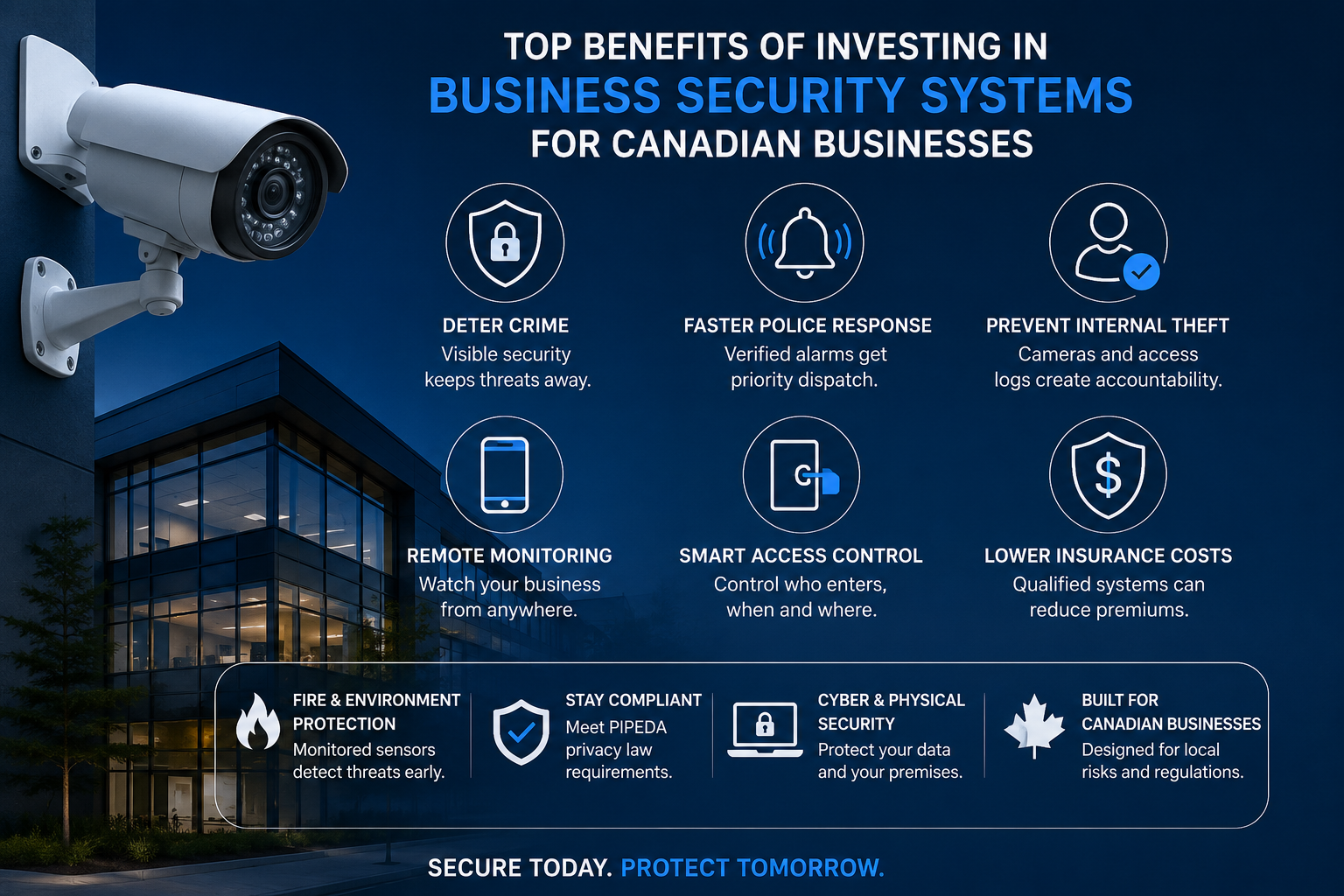
Visible cameras, alarm signage, and access-controlled doors send a clear message to would-be thieves: this location is not an easy target. Criminals typically look for the path of least resistance, and a business that visibly invests in security gets passed over in favor of a softer target.
2. Faster Police Response Through Verified Alarms
Many Canadian cities, including Vancouver, Calgary, and Edmonton, no longer dispatch police to unverified alarms — too many false alerts have made "standard" alarms low priority. A monitored, verified system lets an operator confirm an actual intrusion using live video or audio before contacting police, which triggers a priority dispatch instead of a delayed one. This also helps you avoid the steep false-alarm fines some cities charge businesses.
3. Protection Against Internal Theft
Cameras and access logs aren't just for outsiders. Knowing their movements are recorded makes employees less likely to steal from cash drawers, stockrooms, or supply closets, and gives you concrete evidence if an investigation is ever needed.
4. Remote Monitoring From Anywhere
Modern systems let you arm, disarm, view live footage, and get instant push alerts from a smartphone app, no matter where you are. Owners of multi-location businesses especially benefit from being able to check every site from one dashboard.
5. Smarter Access Control
Traditional keys are easy to lose, copy, or forget to collect from a former employee. Fobs, PIN codes, and mobile credentials let you control exactly who can enter which areas and at what times — and you can revoke access instantly the moment someone leaves the company.
Lower Insurance Premiums and Long-Term Cost Savings
Insurance companies reward businesses that reduce their own risk. A properly certified, alarm monitoring system can qualify your business for a noticeable discount on commercial insurance premiums — often enough to offset a good chunk of your monthly monitoring cost. Add in the money saved by preventing even one break-in or inventory loss, and a security system frequently pays for itself well before the contract term is up.
Staying Compliant With Canadian Privacy Law
If your system includes cameras or access logs, you're collecting personal information — and that puts you under Canada's federal privacy law, PIPEDA. This means posting proper signage where cameras are in use, limiting footage access to authorized staff, and storing recordings securely. A reputable installer will help make sure your setup, signage, and data-handling practices meet these requirements, protecting you from fines and investigations down the road.
More Than Break-Ins: Fire, Flood, and Environmental Risk
A modern system isn't limited to intruders. Monitored smoke and carbon monoxide detectors can alert the fire department the moment something goes wrong, even at 3 a.m. with no one on site. Water-leak sensors are just as valuable — a burst pipe during a Canadian winter can shut a business down for weeks if it goes unnoticed overnight. Bundling these sensors into your existing security platform means one system protects you from several types of loss, not just theft.
Don't Forget the Digital Side of Security
Physical protection is only half the picture. Canadian businesses are increasingly targeted by phishing and ransomware, and a growing share report being hit by a cyberattack in the past year. Many providers now let you pair your physical security platform — cameras, access logs, alarms — with basic network monitoring and staff awareness training, giving you one coordinated defense against both a break-in and a data breach instead of treating them as separate problems.
Choosing the Right System for Your Business
Before signing with a provider, think through:
- Property type and layout — a warehouse needs different coverage than a retail storefront or office.
- Certification — look for ULC-certified monitoring, which insurers recognize and cities require for verified response.
- Scalability — pick a system that can add cameras, sensors, or locations as you grow.
- Compliance support — your installer should help you meet PIPEDA requirements, not just install hardware.
- Buy vs. lease — buying is usually cheaper long-term, but leasing offers easier upgrades as technology changes.
Final Verdict: Is It Worth the Investment?
A business security system isn't just a defensive purchase — it's a business decision that touches your insurance costs, your legal compliance, your staff's safety, and your bottom line. From deterring break-ins and catching internal theft to qualifying for insurance discounts and meeting Canadian privacy law, the benefits stack up quickly.
For Canadian business owners weighing the cost against the risk, the real question isn't whether you can afford a security system — it's whether you can afford to keep operating without one. Partnering with an experienced provider like United Security ensures your setup is built around your business's specific risks, not a one-size-fits-all package.
Ready to protect your business? Contact United Security at 1-800-466-3348 to schedule a free consultation. Our certified team will walk your property, identify vulnerabilities, and design a monitoring solution built for how your business runs.