 Canada

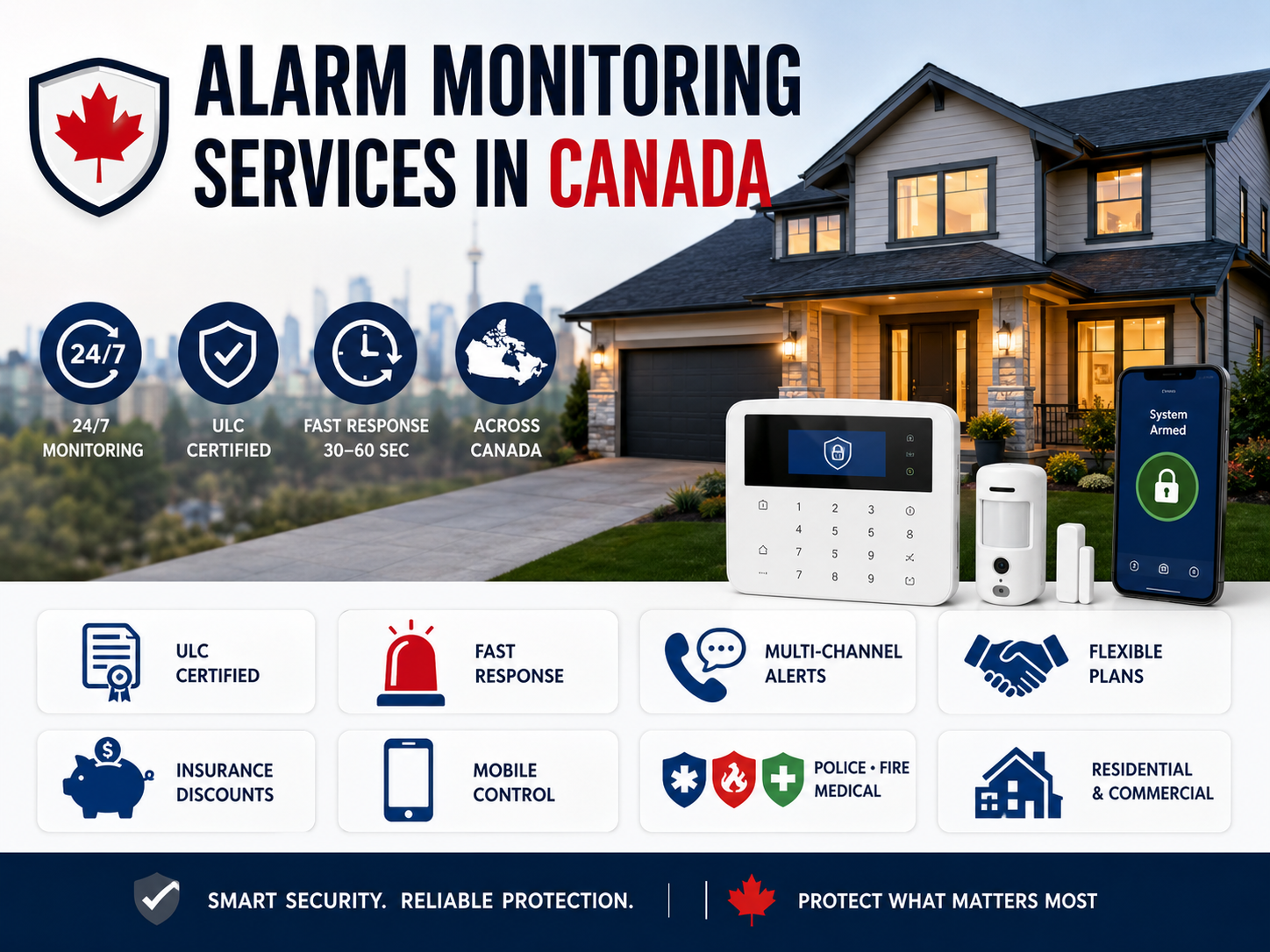
Choosing an alarm monitoring service in Canada means navigating a mix of telecom giants, regional dealers, and budget-friendly no-contract providers — all promising "24/7 protection" without explaining what actually happens behind the scenes. This guide breaks down how monitoring works, what separates a good provider from a mediocre one, and which questions to ask before you sign anything.
What Is Alarm Monitoring, Exactly?
When your security system is armed, every door sensor, motion detector, and smoke alarm reports back to a central control panel. If a sensor trips without the correct code entered in time, the panel sends a signal — usually over cellular connection, though some older systems still use a landline — to a central monitoring station. Trained operators there verify the alarm and dispatch police, fire, or paramedics as needed. The entire process, from trigger to operator action, typically takes well under a minute with a reputable provider.
Why ULC Certification Matters
One of the most important things Canadian homeowners overlook is ULC certification. ULC (Underwriters Laboratories of Canada) listed monitoring stations meet strict national standards for redundancy, response times, and infrastructure resilience, including backup power and duplicate communication lines. Many insurance providers in Canada offer 10–20% discounts on home insurance premiums when you can show proof of a ULC-monitored alarm system, so confirming this certification isn't just about safety — it can also pay for itself.
Major Players in the Canadian Market
Telus (formerly ADT) is the largest alarm provider in the country, serving millions of customers with bundled smart home, security, and fire monitoring. Pricing typically runs from roughly $15 to $60 per month, but plans usually require a three- to five-year contract.
Rogers Smart Home Monitoring offers similar bundled packages, monitored through a Sudbury-based central station, with live video streaming and environmental monitoring add-ons alongside standard alarm response.
Regional and independent dealers (such as Canadian Security Professionals, Fluent, and various local installers) often provide more personalized service, frequently using third-party wholesale monitoring stations behind the scenes.
No-contract, DIY-friendly options like Ring Alarm and newer budget monitoring services have gained traction by letting customers own their equipment outright and pay month-to-month, without the multi-year commitments common among the larger telecoms.
Contract vs. No-Contract: What's the Real Trade-off?
Long-term contracts from major telecom-backed providers often include free or discounted equipment in exchange for locking you in for three to five years, with early termination fees if you switch. No-contract or wholesale-monitoring alternatives charge less per month and let you keep your existing panel, but you typically pay full price for equipment upfront and may get less hand-holding during setup. If you already own a compatible alarm panel, switching to an independent monitoring service can sometimes cut your monthly bill by more than half compared to a traditional telecom plan.
What to Look for in a Provider
- ULC-listed central stations — confirms regulatory-grade reliability and redundancy.
- Response time benchmarks — leading providers verify and dispatch in 30–60 seconds; ask for this number explicitly rather than vague marketing claims.
- Communication method — cellular connections are more reliable than landlines and harder to disable during a break-in.
- Multi-channel alerts — look for providers that contact you via app, text, call, and two-way voice rather than a single phone call attempt.
- Bilingual and trained operators — especially relevant for Quebec and other bilingual regions.
- Backup infrastructure — redundant monitoring stations protect against outages caused by storms or regional power failures.
- Coverage area — confirm the provider actually services your province; some major brands (like Frontpoint) don't operate in Quebec, and rural or northern regions may need cellular-only solutions.
Understanding False Alarm Fees
This is a detail most Canadian alarm guides skip entirely. Many municipalities charge homeowners a fine for repeated false alarm dispatches — for example, Ottawa adjusts its fee annually based on police service budgets, and similar bylaws exist in Toronto, Calgary, and Vancouver. To avoid these charges:
- Keep motion sensors away from heating vents, windows, and fireplaces, which can trigger false infrared readings.
- Test backup batteries regularly in both the control panel and individual sensors.
- Verify door and window sensor alignment periodically, since loose adhesive or shifted magnets are a common cause of nuisance alarms.
- Notify your monitoring company before running a system test so it isn't mistaken for a real event.
Some cities also require homeowners to confirm suspected criminal activity, or trigger multiple alarm zones, before police will dispatch — a policy designed specifically to reduce false-alarm callouts.
Residential vs. Commercial Monitoring
Residential plans typically focus on intrusion, fire, carbon monoxide, and flood detection with consumer-friendly mobile apps. Commercial monitoring usually adds access control integration, elevator monitoring, multi-zone coverage for larger properties, and dedicated account managers — features rarely needed in a single-family home but essential for warehouses, retail spaces, or multi-tenant buildings.
Wholesale vs. Retail Monitoring: A Distinction Worth Knowing
Many Canadians don't realize that the company installing their alarm system often isn't the one physically monitoring it. Wholesale monitoring providers operate the actual central stations and partner with hundreds of local dealers, who then resell monitoring under their own brand. This arrangement can still deliver excellent service, but it means asking your installer directly which ULC-listed station handles your signals is a smart due-diligence step before committing.
Final Verdict
The best alarm monitoring service in Canada isn't necessarily the most recognizable brand — it's the one with ULC-listed redundancy, transparent response times, and a contract structure that fits how long you actually plan to stay in your home. Before signing up, confirm certification, ask about false alarm policies in your municipality, and compare whether a no-contract independent monitor could deliver the same protection for meaningfully less each month.
Looking for a reliable, ULC-listed alarm monitoring provider? Contact United Security at 1-800-466-3348 to schedule a free consultation. Our certified technicians will assess your property, walk you through contract and no-contract options, and design a monitoring solution that fits your home or business.