 Canada

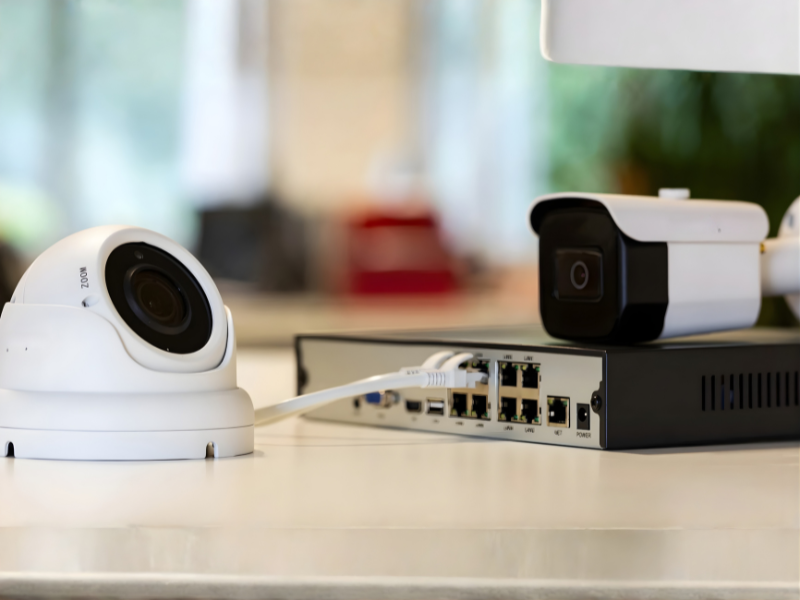
In today's surveillance landscape, choosing between Power over Ethernet (PoE) and WiFi wireless security cameras is a common dilemma for homeowners, renters, and business owners alike. Both technologies deliver digital IP-based video with remote access capabilities, but they differ significantly in power delivery, connectivity, installation, and performance. PoE cameras use a single Ethernet cable for both power and data, offering robust reliability. WiFi cameras rely on wireless networks for transmission, while typically needing separate power sources like outlets or batteries.
Understanding these distinctions helps avoid issues such as unstable connections, degraded video quality, or unnecessary expenses. This article explores the core differences, advantages, drawbacks, and scenarios where each excels, drawing from industry standards and real-world performance in 2026.
What Are PoE and WiFi Security Cameras?
Modern security cameras are predominantly IP cameras that transmit video over networks. PoE cameras represent a wired subset: they draw power directly from an Ethernet cable connected to a PoE switch or injector, eliminating the need for nearby outlets. This setup suits fixed, high-demand installations where consistent operation is essential.
WiFi cameras, conversely, connect wirelessly to your router for data transmission. They require power from a plug or rechargeable battery (with some models featuring solar options). This wireless design prioritizes placement flexibility, making it popular for quick setups without cabling.
All PoE cameras are IP cameras, but not all IP cameras use PoE; many opt for WiFi instead.
DIY vs Professional Installation: What to Expect
The choice between DIY and professional installation impacts system reliability, video quality, and long-term security performance. Knowing what to expect from each option helps avoid costly mistakes later.
DIY Security System Installation
Lower upfront investment, as DIY systems eliminate professional labor costs, making them attractive for budget-conscious users. However, savings may be offset by performance issues or future upgrades.
Simple plug-and-play setup, allowing users to install cameras and sensors quickly without technical knowledge, but this often limits proper optimization of coverage and angles.
Restricted system customization, since DIY kits usually support limited camera types, fixed layouts, and minimal integration with advanced security features.
Higher likelihood of installation errors, such as poor mounting height, weak WiFi signals, or incorrect field of view, which can reduce system effectiveness.
No professional risk assessment, meaning blind spots, entry points, and property-specific threats may go unnoticed during setup.
User-managed troubleshooting and maintenance, requiring time and technical effort when devices disconnect, firmware fails, or alerts stop working.
Professional Security System Installation
Customized system planning, where professionals evaluate your property layout, entrances, and high-risk zones to ensure complete and strategic coverage.
Proper cable management and device placement result in cleaner installations, better camera angles, and reduced risk of tampering or damage.
Optimized network and power configuration, ensuring stable connectivity, faster data transmission, and uninterrupted recording performance.
Improved long-term reliability, as professional-grade equipment and expert installation reduce downtime and system failures.
Ongoing technical support and maintenance, often including warranties, firmware updates, and system health checks.
Compliance with safety and monitoring standards, which is especially important for insured, commercial, or professionally monitored security systems.
Key Differences Between PoE and WiFi Cameras
The primary distinctions lie in power, connectivity, installation complexity, video performance, security vulnerabilities, and costs.
Power Source
PoE cameras receive power and data through one cable, enabling continuous operation without batteries or outlets. WiFi cameras often use batteries (lasting months with smart power management) or plugs, offering placement freedom but requiring occasional recharges or proximity to power.
Connectivity and Reliability
PoE provides a direct wired link immune to wireless interference from devices like microwaves or neighboring networks. It maintains stable performance even in challenging environments. WiFi cameras can suffer from signal degradation due to distance, walls, or congestion, leading to buffering or dropped feeds.
Installation
PoE involves running Ethernet cables (Cat5e/Cat6), which may require drilling or professional help, ideal for new builds or remodels. WiFi setups are typically DIY-friendly, involving simple mounting and app pairing.
Video Quality and Transmission
PoE supports higher resolutions like 4K with low latency, as wired bandwidth is dedicated and abundant. WiFi may experience compression or delays on shared networks, particularly with multiple cameras.
Security Risks
Wired PoE connections are harder to intercept or jam, though vulnerable to physical tampering. WiFi signals can be more susceptible to hacking if encryption is weak, but many modern models include robust protections.
Cost
PoE has higher upfront costs for cabling and hardware but lower long-term maintenance. WiFi is cheaper initially but may incur battery replacements or troubleshooting expenses.
PoE vs. WiFi Camera: What's the Difference?
| Feature | PoE Camera | WiFi Camera |
|---|---|---|
| Power Source | Single Ethernet cable | Battery, plug-in, or solar |
| Installation | Moderate to complex (cabling required) | Easy DIY, minimal tools |
| Connectivity | Wired, highly stable | Wireless, prone to interference |
| Video Quality | Superior (consistent 4K, low latency) | Good, but varies with signal strength |
| Reliability | Excellent, no signal drops | Variable, affected by the network |
| Security | High (harder to hack wirelessly) | Medium (encryption-dependent) |
| Scalability | Easy with switches | Limited by WiFi range/bandwidth |
| Ideal For | Businesses, large properties | Homes, rentals, quick setups |
| Upfront Cost | Higher (cabling/hardware) | Lower |
| Long-Term Maintenance | Low | Higher (batteries, signal issues) |
Pros and Cons
PoE Pros: Unmatched stability, superior video, interference resistance, centralized management.
PoE Cons: Cabling effort, higher initial investment, fixed positions.
WiFi Pros: Flexible placement, quick installation, portability.
WiFi Cons: Potential interruptions, battery management, bandwidth competition.
Which Is Best for Your Needs?
For commercial security or large residential applications requiring unwavering reliability, such as warehouses or multi-entry homes, PoE stands out for its performance and scalability. In rental properties, apartments, or smaller homes security where cabling is impractical, WiFi provides convenient coverage.
Many users opt for hybrids: PoE for critical areas (entrances, perimeters) and WiFi for supplementary spots (interiors, remote outbuildings). This balanced approach maximizes strengths while minimizing weaknesses.
Consider the network infrastructure too strong. WiFi supports multiple wireless cameras effectively, while PoE offloads bandwidth entirely. Future-proofing favors PoE for expanding systems or integrating advanced features like high-resolution AI analytics.
Ultimately, the choice hinges on priorities: reliability and quality versus ease and flexibility. In high-stakes environments, PoE often proves the wiser long-term investment, while WiFi excels in casual or temporary setups.
PoE vs WiFi: Which One Is Best?
PoE and WiFi cameras serve different security needs depending on reliability, scalability, and installation preferences. Understanding their real-world performance helps you make the right choice.
PoE (Power over Ethernet) Cameras
Single Ethernet cable for power and data, simplifying connections while delivering consistent performance without relying on wireless signals.
Highly stable and interference-free connection: making PoE cameras ideal for environments with heavy WiFi traffic or signal obstacles.
Supports higher video resolution: including 4K and continuous recording, without buffering or signal loss.
Enhanced data security: as footage is transmitted through a closed wired network rather than over public or shared WiFi.
Well-suited for larger properties: such as multi-story homes, warehouses, and commercial buildings with multiple cameras.
Typically requires professional installation due to structured cabling, network configuration, and proper power sourcing.
WiFi Security Cameras
Quick and flexible installation: making WiFi cameras convenient for renters, apartments, or properties where drilling is limited.
Lower initial setup cost: as they rely on existing wireless networks rather than dedicated Ethernet cabling.
Easy relocation and expansion: allowing users to move cameras without rewiring when layouts or needs change.
Performance depends heavily on WiFi strength, which can lead to lag, dropped footage, or reduced video quality.
More susceptible to interference: especially in areas with congested wireless networks or thick walls.
Best for small-scale monitoring: where limited cameras and strong internet coverage are available.
Conclusion
Choosing between PoE and WiFi or wireless security cameras ultimately depends on your property size, security expectations, and long-term reliability needs. Both technologies serve specific purposes, but their differences in performance, stability, and scalability can significantly impact overall system effectiveness. PoE security cameras are best suited for users who prioritize consistent video quality, uninterrupted recording, and stronger data security. Their wired connection minimizes interference, supports higher resolutions, and offers dependable performance for larger homes and commercial environments.
Ready to secure your property? Contact 1-800-466-3348 to speak with a security specialist today from United Security and get a custom quote for your CCTV installation.