 Canada
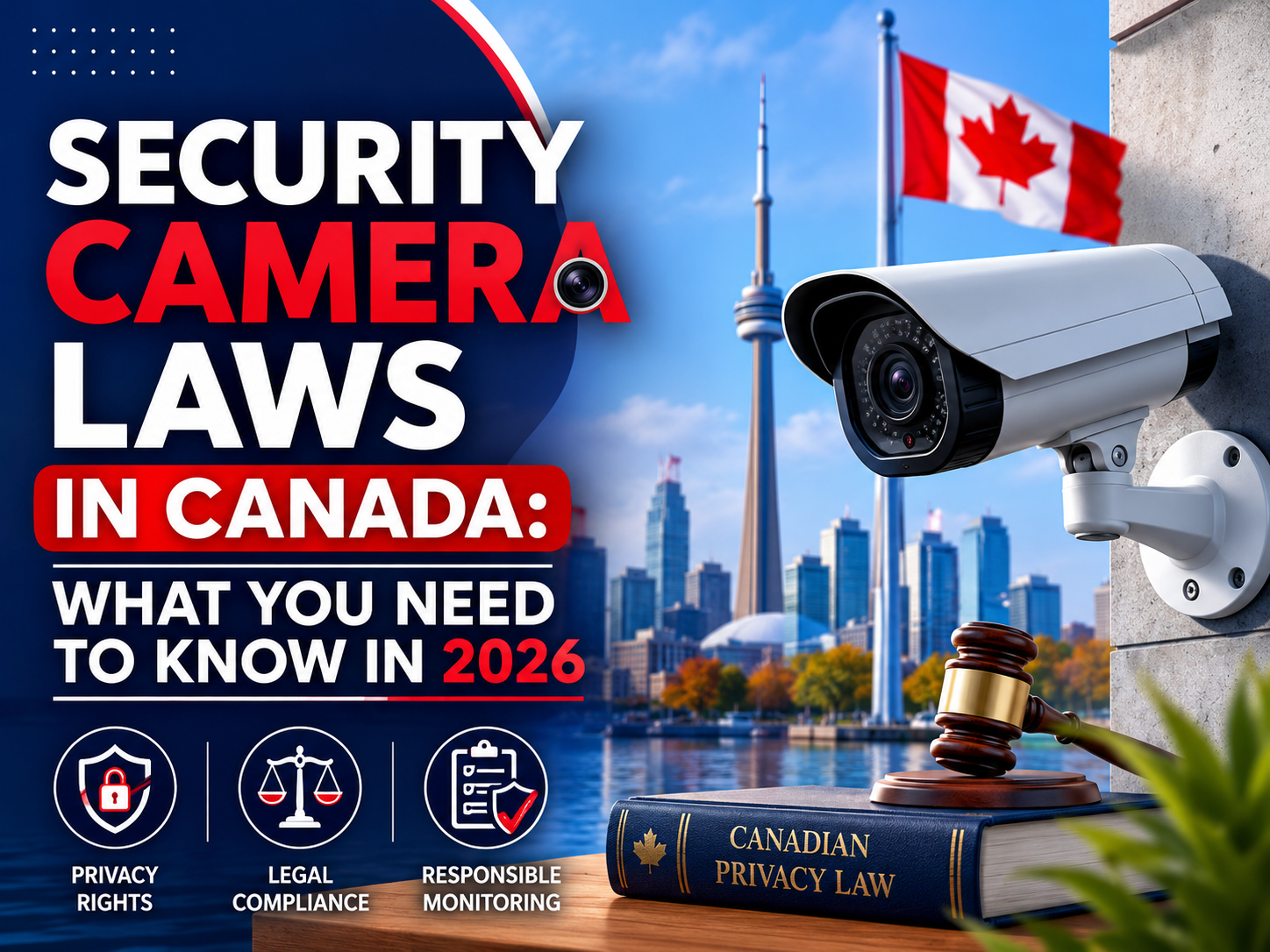
Security cameras are everywhere in Canada — from downtown retail stores and office lobbies to residential driveways and condo hallways. They deter crime, provide evidence, and give property owners peace of mind. But installing a camera without understanding Canadian privacy law can land you in serious legal trouble.
This guide breaks down everything you need to know about security camera laws in Canada, including federal regulations, provincial differences, placement rules, audio recording restrictions, and what happens if you violate the law.
Are Security Cameras Legal in Canada?
Yes — security cameras are completely legal in Canada for both homes and businesses. However, their use must comply with federal and provincial privacy laws. The key principle is simple: your right to security cannot come at the expense of someone else's right to privacy.
Legal use of CCTV cameras requires transparency, necessity, and proportionality. You need a legitimate reason to record, and you must not capture areas where people have a reasonable expectation of privacy.
The Key Laws Governing Security Cameras in Canada
Canada does not have a single nationwide "CCTV law." Instead, video surveillance is regulated through a combination of federal and provincial legislation.
1. PIPEDA (Personal Information Protection and Electronic Documents Act)
PIPEDA is the primary federal privacy law for private-sector organizations. It applies to businesses engaged in commercial activities across most of Canada. Under PIPEDA, video footage that can identify a person is considered personal information and must be:
- Collected only for a clearly stated, legitimate purpose
- Protected against unauthorized access
- Retained only as long as necessary
- Made accessible to individuals upon request (with some exceptions)
2. The Privacy Act
The federal Privacy Act governs how federal government institutions collect, use, and disclose personal information — including surveillance footage. This applies to federal offices, border agencies, and national institutions.
3. The Criminal Code of Canada
The Criminal Code sets hard limits on what any person or organization can record. Key restrictions include:
- Voyeurism — Recording someone in a place where they have a reasonable expectation of privacy (e.g., bathrooms, changing rooms, bedrooms) is a criminal offence.
- Interception of private communications — Recording audio without consent from all parties involved is generally prohibited under Section 184 of the Criminal Code.
Provincial Privacy Laws: How They Differ
While PIPEDA applies nationally, some provinces have enacted their own privacy legislation that takes precedence:
| Province | Applicable Law |
|---|---|
| British Columbia | Personal Information Protection Act (PIPA) |
| Alberta | Personal Information Protection Act (PIPA Alberta) |
| Quebec | Law 25 (Act Respecting the Protection of Personal Information) |
| Ontario (public sector) | MFIPPA / FIPPA |
| All other provinces | PIPEDA (federal default) |
Ontario businesses are primarily governed by PIPEDA for commercial use, while public institutions like schools, libraries, and municipal offices fall under MFIPPA (Municipal Freedom of Information and Protection of Privacy Act).
British Columbia operates under its own PIPA, which has requirements similar to PIPEDA but with some regional distinctions. BC organizations must still post signage, limit collection, and secure footage properly.
Where Can You Legally Place Security Cameras?
Camera placement is one of the most common sources of legal disputes in Canada. Here are the rules:
Allowed Locations
- Your own driveway, front yard, and entrance
- Inside your business premises (retail floor, reception area, storage rooms)
- Common areas in condos and apartments (lobbies, mailrooms, elevators, parking garages)
- Warehouses, hallways, and loading docks
Prohibited Locations
- Bathrooms, change rooms, locker rooms, or any private area
- Areas where employees are expected to have privacy (break rooms require special justification)
- Directed at a neighbour's windows, backyard, or bedroom
- Public sidewalks or streets (only municipal authorities can record public spaces)
The Neighbour Camera Question
Can you point a camera at your neighbour's property? Generally, it is legal if the purpose is security and the camera is positioned on your own property. However, if your camera captures your neighbour's private spaces unnecessarily — their backyard, pool area, or windows — it can be considered a violation of privacy under the doctrine of "intrusion upon seclusion," which Canadian courts have recognized as a civil claim.
The legal solution is to adjust the camera angle, not tamper with a neighbour's camera (which is itself illegal).
Mandatory Signage Requirements
One of the most important obligations under Canadian law is notifying people that they are being recorded. This applies to all businesses and commercial properties.
Your signage must:
- Be clearly visible at all entrances and monitored areas
- State that video surveillance is in use
- Mention the purpose (e.g., "for security purposes")
- Include contact information for inquiries
- Be posted in both English and French where applicable
Failing to post proper signage is one of the most common CCTV compliance violations in Canada and can result in a complaint to the Office of the Privacy Commissioner.
Audio Recording: A Separate, Stricter Rule
Many security cameras today come with built-in microphones. In Canada, recording audio is treated far more strictly than video.
Under the Criminal Code, intercepting a private communication without the consent of all parties involved is a federal offence. This means:
- You cannot record conversations between employees, customers, or visitors without explicit consent
- Implied consent (via signage) is generally not enough for audio
- Most legal experts and privacy commissioners recommend disabling audio features entirely unless you have a specific, legally sound reason and proper consent mechanisms in place
Footage Storage and Retention Rules
Collecting footage is just the beginning. How you store and manage that footage also has legal implications.
Best practices under Canadian privacy law:
- Store footage securely with restricted access — only authorized personnel should have access
- Retain footage for 30 to 90 days for routine security purposes, then delete it
- Do not use security footage for employee performance monitoring without separate justification and disclosure
- If a crime occurs or footage is needed for investigation, retain it until the matter is resolved
- Respond to individual requests for footage in which they appear, subject to legal exceptions
Employee Surveillance: Know the Rules
If you are a business owner using cameras to monitor employees, there are additional obligations:
- You must disclose to employees that surveillance is in place — hidden cameras targeting employees violate both PIPEDA and Canadian human rights law
- Cameras cannot be placed in employee washrooms, change rooms, or private rest areas
- Surveillance must be proportionate — constant monitoring of employees without evidence of misconduct is considered excessive
- A Privacy Impact Assessment (PIA) is strongly recommended before installing or expanding a workplace surveillance system
What Happens If You Break CCTV Privacy Laws in Canada?
Violating Canadian privacy laws related to surveillance can have serious consequences:
- Complaints to the Office of the Privacy Commissioner of Canada (OPC) — investigations can result in public reports and binding recommendations
- Civil lawsuits — employees, tenants, customers, or neighbours can sue for damages under intrusion upon seclusion or PIPEDA violations
- Fines and penalties — especially in Quebec under Law 25, which carries significant financial penalties for non-compliance
- Criminal charges — in cases involving voyeurism or illegal audio interception
Final Verdict
Security cameras are a powerful and legal tool in Canada — but only when used responsibly. The law does not prohibit surveillance; it regulates it to protect the privacy rights of every Canadian.
Whether you're a homeowner, a small business owner, or a property manager, understanding your obligations under PIPEDA, the Criminal Code, and your provincial privacy law is essential. When in doubt, consult the Office of the Privacy Commissioner of Canada (priv.gc.ca) or speak with a certified privacy professional.
Done right, security cameras protect both your property and your legal standing.
Need a professionally installed, fully compliant security camera system? Contact United Security at 1-800-466-3348 to schedule a free consultation. Our certified technicians will assess your property, advise on legal placement and signage, and design a security system that protects your premises — installed correctly from day one.