 Canada

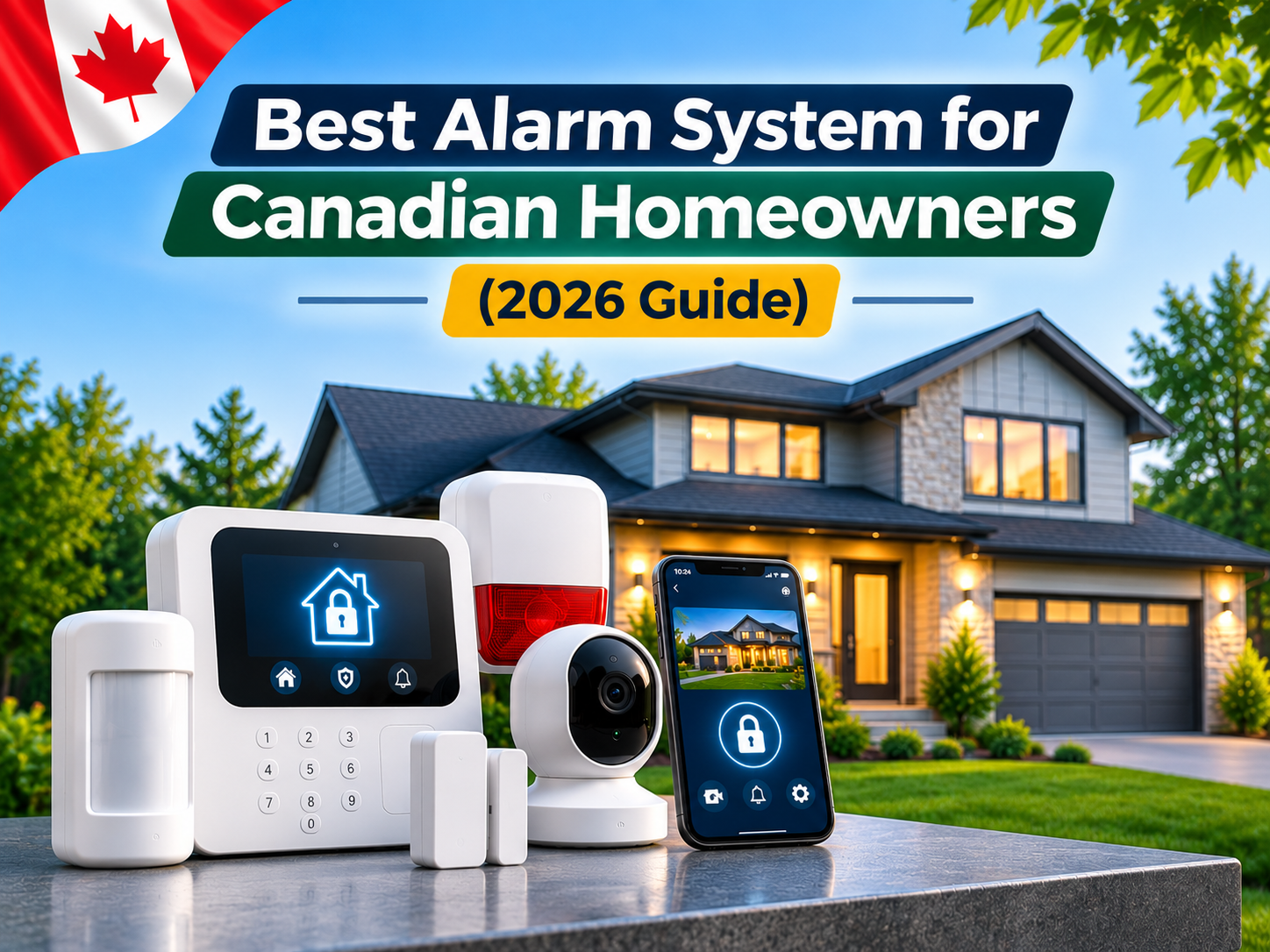
Simply enter the words "best alarm system" into a search box, and you'll be presented with a wall of ranked lists, star ratings, and affiliate links. Most are geared to a U.S. clientele, use the wrong currency and list brands without ever asking what type of home you are in. As a Canadian homeowner, that's not a good option.
There's no one type of alarm system that is best for homes in Canada. It's equipment, communication, monitoring and contract terms that work for your property and make it through your winters. In this guide, you will learn how to do that step by step, and without any sales talking.
What "Best" Really Means for a Canadian Home
A good alarm system does four things well:
- Detects problems accurately, with sensors placed where intruders and hazards actually appear
- Reports reliably, even when the power or internet is down
- Gets a response, because someone acts on the alert
- Doesn't trap you, with clear pricing and fair contract terms
Flashy features come after those four. Our guide on how home alarm systems work explains the parts in more detail, if you want the background first.
The Features That Matter Most
1. Professional Monitoring That Fits Your Province
Professional monitoring is a staffed centre that will monitor your system 24 hours a day, will check alarms and alert emergency services. Availability and language might differ from province to province in Canada. In particular, try to find the ones that are able to offer professional monitoring from your location, even in Quebec, as well as in French if you require it. Inquire about the location of the monitoring centre and if it is independently certified.
2. Cellular Backup or Dual-Path Communication
Winters in Canada also come with storms and power outages, as well as internet connection failures. When the alarm only alerts on home internet, it can be silent just when you need it the most. Check for cell phone communication as primary or secondary. See our explanation of the different types of home alarm systems for more details.
3. Backup Power
The control panel should have an extra battery to feed power if there is a power failure. Inquire about the duration of its life and how you'll be alerted when it is depleted.
4. Cold-Weather Equipment
Wireless sensors are battery powered and cold adversely impacts batteries. Garage, shed and other unheated areas should be paid special attention. Outdoor cameras and sirens should be rated to withstand the weather and should be rated to operate in the temperature range for your area that has winters.
5. Whole-Home Protection, Not Just Burglary
Home burglaries are not the only case where a good home alarm is needed. Ask about:
- Smoke and heat detection
- Carbon monoxide detection
- Basement and flood/water leak sensors.
- Freeze or low temperature alerts that will help avoid broken pipes
These are typically an additional, not all providers cover them and so check with them before making your final cost comparison.
6. Sensible Contracts and Clear Pricing
Total cost is the equipment, installation, monitoring and change/cancellation fees. Watch for:
- Long contracts with early-termination charges
- Equipment you must return or keep paying for if you leave
- Prices that aren't clearly quoted in Canadian dollars, with taxes shown
- Add-ons that are required rather than optional
7. False Alarm Handling
There are fees imposed in many cities for false alarm calls and the rules differ from city to city. An effective provider will help you minimize false alarms by strategically placing your sensors, using detectors that can be pet-proof and by verifying your alarms. See the local rules and inquire about how you will avoid fines with the provider.
8. Smart Features You Will Use!
App control, notifications and camera integration are features that are beneficial — but not a mandate. The best alarm system does not require them, and utilizes them when they are beneficial. Remember some features will need Internet or subscription.
Best Alarm System by Home Type
| Home Type | What to Prioritize |
|---|---|
| Condo or apartment | Wireless sensors, simple self-install or professional setup, cellular or reliable Wi-Fi, no drilling |
| Townhouse | Entry-point coverage, wireless or hybrid, professional monitoring |
| Detached home | Full perimeter coverage, glass-break and motion sensors, cellular backup, professional monitoring |
| Large home or acreage | Hybrid system, signal repeaters or wired sensors, outbuilding coverage, dual-path communication |
| New build or renovation | Wired or hybrid, planned before drywall goes up, dual-path communication |
| Rental | Portable wireless kit, landlord permission, no permanent changes |
If you're deciding between connection types, our comparison of wireless vs wired alarm systems for Canadian homes goes deeper on each.
Monitored vs Self-Monitored: Which Should You Pick?
| Option | Works When You're Unavailable? | Best For |
|---|---|---|
| Professional monitoring | Yes, around the clock | Most homeowners, especially those who travel or work odd hours |
| Self-monitoring | Only if you see the alert | Apartments, tight budgets, or people who are always reachable |
| Local siren only | No | A basic deterrent, not a complete solution |
The majority of Canadians in their homes could benefit from professional monitoring, especially in the winter months, when you might not be home or on the phone.
DIY or Professional Installation?
Both can provide you with a very good system. Do-it-yourself kits are appropriate for smaller homes, condos and self-confident tinkerers. Professional installation is for those who want a design for them or for larger homes or wired/hybrid systems. Our guide on do-it-yourself vs professional home security installation goes into the pros and cons.
Selecting the Best Home Alarm System: A 7 Step Process.
- Walk around the house and determine all doors, ground floor windows and vulnerabilities.
- Decide what device(s) you want: monitoring, smoke and CO detection, flood protection, cameras.
- Decide whether sensors are connected wirelessly, wired or hybrid.
- Select alert delivery method – cellular, dual-path.
- Compare the overall cost (including equipment, installation, monitoring and contract).
- Explore with providers how they perform in winter, how they have had their backup power plans in place and how they deal with false alarms.
- Test after installation and ensure the entire family is familiar with its use.
To compare the different kinds of companies and the services they provide, read our list of the best home security companies in Canada.
Common Mistakes When Choosing an Alarm System
- Buying a product without researching regional availability or options, or contract terms
- If a message is not reliable (i.e. the alarm will blow in the event of an outage)
- Not planning for smoke, CO and flood protection, allowing openings for non-burglary risks
- Purchasing of more equipment than the home requires or not enough equipment to protect the main points of entry.
- Ignore insurance because some insurance companies offer discounts for monitored systems; check with your insurance company to see if that's the case (ask them what insurers does it apply to).
Final Verdict
A home security system with the most stars on a ranking page is not necessarily the best system for Canadian homeowners. It's the one that calls you when it senses correctly, tells you about outages, responds and is fair on contracts. This typically translates into a wireless or hybrid system, one that is able to handle cold weather, one that provides security beyond burglary, and one that is monitored by a professional.
Our team at United Security can design and monitor home alarm systems in the GTA, and we won't start any discussion about your property before we know what you need, and tell you in non-techie terms what it is. We're here to help you if you want an alarm system for your home that's not just the loudest in the market, but the best.
Not sure which alarm system fits your home? Contact us at 1-800-466-3348 to speak with a security specialist today from United Security and get a free, no-obligation consultation.