 Canada

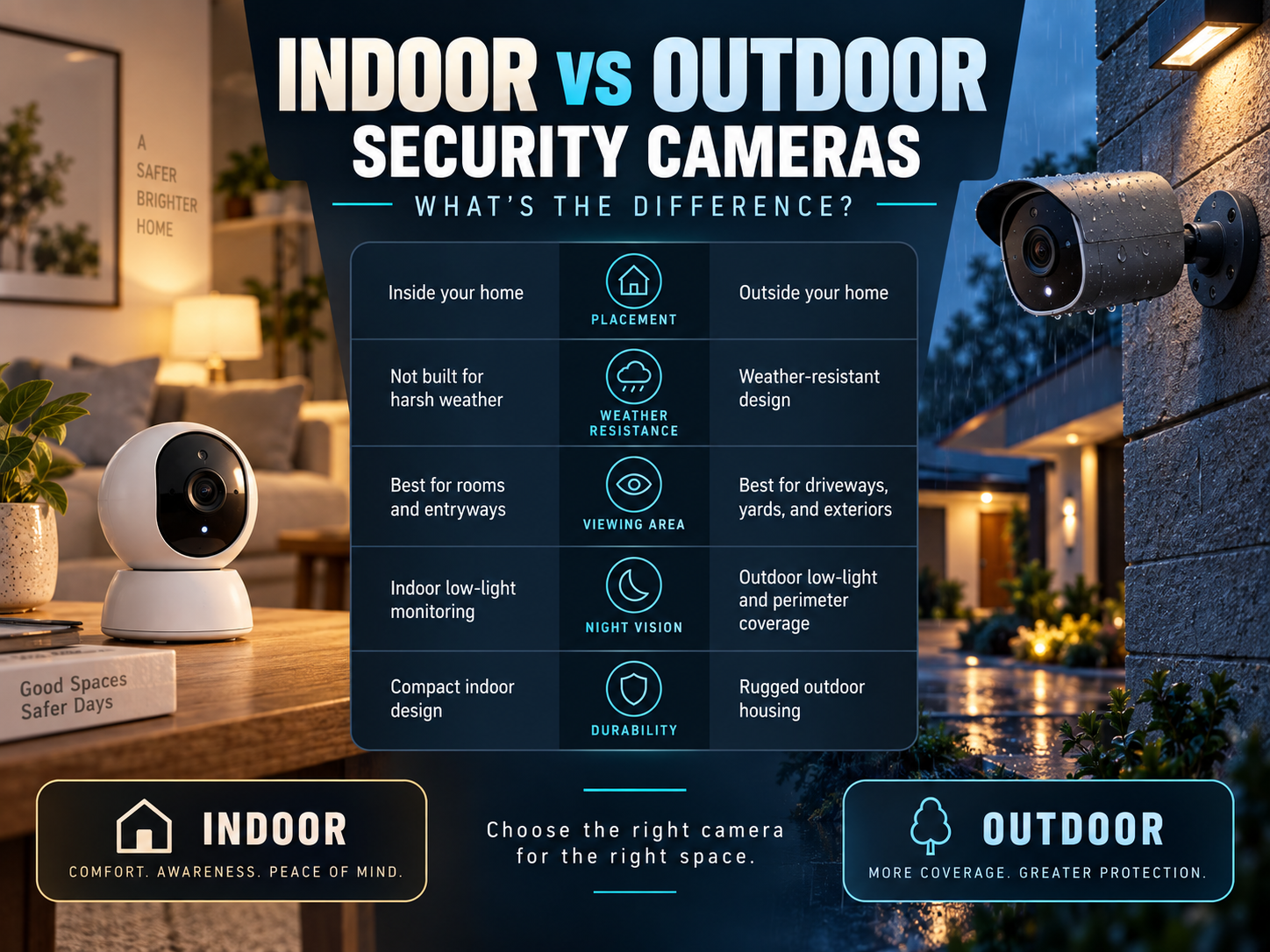
At first glance, the choice seems obvious: outdoor cameras go outside, indoor cameras go inside. But the real difference goes deeper than placement. Indoor and outdoor cameras are built with different hardware, different goals, and different jobs to do, and using the wrong camera in the wrong environment is one of the most common (and costly) mistakes homeowners make.
If you're specifically shopping for outdoor coverage, our guide to the best smart security cameras breaks down top options for Canadian weather. This post focuses on the difference itself, so you know exactly what each camera type is built for before you buy.
What Makes a Camera "Indoor" or "Outdoor"?
The core difference comes down to what the camera has to survive and what job it's meant to do.
Indoor cameras are built for controlled environments. They monitor activity inside a home or business, watching over living rooms, hallways, entryways, or stockrooms, without needing to withstand rain, wind, or temperature swings.
Outdoor cameras are built to survive the elements. They're housed in rugged, weatherproof casings designed to handle rain, snow, extreme cold, and direct sunlight, while also resisting tampering, since they're often within easy reach.
Indoor vs Outdoor Security Cameras: Key Differences
| Factor | Indoor Cameras | Outdoor Cameras |
|---|---|---|
| Weatherproofing | Not required | Essential (look for IP65 or higher) |
| Design | Compact, discreet | Larger, rugged housing |
| Primary goal | Verify activity inside the property | Deter and detect activity before entry |
| Field of view | Narrower, for smaller rooms | Wider, for yards, driveways, and perimeters |
| Night vision | Standard infrared | Stronger infrared or colour night vision |
| Tamper resistance | Minimal | Reinforced housing, vandal-resistant options |
| Typical placement | Living rooms, hallways, entryways, nurseries | Front doors, driveways, backyards, garages |
Why Outdoor Cameras Need to Work Harder
Outdoor cameras face challenges indoor cameras simply never encounter:
- Weather exposure: rain, snow, humidity, and Canadian winter temperatures all take a toll on unprotected hardware
- Direct sunlight and glare: outdoor cameras need better exposure handling to avoid washed-out footage
- Wider coverage areas: driveways, yards, and perimeters require a broader field of view than a single room
- Tampering risk: since outdoor cameras are more exposed, rugged, vandal-resistant housing matters more
Why Indoor Cameras Focus on Something Different
Indoor cameras aren't built tougher, they're built smarter for a controlled space:
- Discreet design: indoor cameras are meant to blend into a room, not stand out like a visible deterrent
- Closer-range clarity: since rooms are smaller than yards, indoor cameras optimize for short to mid-range detail rather than wide coverage
- Privacy-conscious features: many indoor cameras include physical shutters or privacy modes for spaces like bedrooms or nurseries
- Two-way audio for daily use: checking in with family, pets, or employees inside the property is a common indoor use case
Deter vs. Verify: The Real Difference in How They're Used
The clearest way to understand the indoor vs. outdoor distinction isn't hardware, it's purpose:
- Outdoor cameras deter and detect. A visible camera at the front door or driveway can stop trouble before it starts, and captures activity as someone approaches.
- Indoor cameras verify. They confirm what's happening inside once someone, a family member, employee, or intruder, is already in the space.
Both roles matter, and neither fully replaces the other.
Can You Use an Indoor Camera Outdoors (or Vice Versa)?
Technically, an indoor camera can be mounted outside, but it won't last. Without weatherproof housing, moisture and temperature swings will damage the electronics fairly quickly, especially through a Canadian winter. Outdoor cameras, on the other hand, can be used indoors without issue, they're just bulkier and less discreet than a camera actually designed for indoor use.
Do You Need Both?
For most homes and businesses, yes. A complete security setup typically layers both camera types together:
- Outdoor cameras cover entry points, driveways, and perimeters, catching activity before someone gets inside
- Indoor cameras confirm what happens if they do, covering hallways, entryways, or high-value rooms
Together, they create overlapping coverage instead of a single point of failure.
Final Verdict: Which is Best for You?
Indoor and outdoor security cameras aren't interchangeable; they're built for different jobs, different environments, and different points in your property's security. Outdoor cameras deter and detect before someone reaches your door, while indoor cameras verify what happens once they're inside. The most reliable security setups use both, matched to the right locations around the property.
At United Security, we help homeowners and businesses across the GTA design camera systems that combine the right indoor and outdoor coverage for their specific property, not a one-size-fits-all package.
Not sure which mix of cameras fits your property? Contact us at 1-800-466-3348 to speak with a security specialist today from United Security and get a free, no-obligation consultation.