 Canada

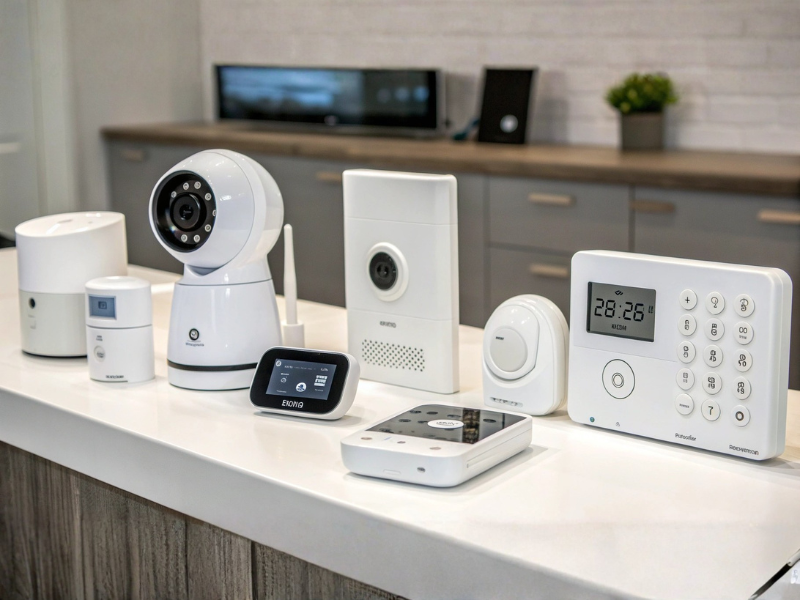
In 2026, home security has evolved beyond simple loud sirens and heavy locks. With the rise of integrated smart homes and a shifting landscape in property security, Canadian homeowners are looking for more than just gadgets; they need a cohesive ecosystem.
Whether you are living in a high-rise in Toronto or a detached home in Calgary, the goal is the same: peace of mind. However, the Canadian climate presents unique challenges that standard security guides often ignore. This guide breaks down the non-negotiable home security must-haves for 2026, specifically tailored for the Great White North.
1. The Video Doorbell: Your First Line of Defense
The video doorbell remains the most critical entry point for any security system. In 2026, it serves as your primary deterrent against "porch pirates" and a way to screen visitors without opening the door.
The "Canada" Factor: Many battery-powered doorbells fail when temperatures drop below -30°C. For Canadian homes, a hardwired video doorbell is a must-have to ensure consistent power during January cold snaps.
Key Features: Look for Package Detection AI and Two-Way Talk.
2. Smart Entry & Motion Sensors
Physical perimeter security is about layers. Smart sensors tell your system when a boundary has been crossed.
Entry Sensors: These should be placed on every ground-floor window and door. In 2026, "slimline" sensors are the standard, fitting invisibly into modern window frames.
Motion Sensors: Modern AI-driven motion sensors can now distinguish between the family dog and an actual intruder, significantly reducing the "false alarm" fatigue that used to plague older systems.
3. Winter-Proof Outdoor Cameras (4K Resolution)
Standard cameras often crack or fog up during the Canadian freeze-thaw cycle. Your outdoor surveillance must be rugged.
- Durability: Ensure your cameras have an IP66 or IP67 weather rating and are rated for operation down to -30°C.
- Resolution: In 2026, 1080p is no longer enough for legal evidence. 4K resolution allows you to zoom in on license plates or facial features with clarity.
- Power: Again, if possible, go for PoE (Power over Ethernet) or hardwired options to avoid the "dead battery in winter" syndrome.
4. Smart Locks with Remote Access
Gone are the days of hiding a spare key under the mat—a major security risk.
Why they are a must-have: Smart locks allow you to create temporary access codes for contractors, dog walkers, or guests.
Auto-Locking: Set your home to "Panic Mode" or "Night Mode" where all smart locks engage automatically at a set time or when your alarm is armed.
Top Pick: Schlage Encode or August Wi-Fi Smart Lock.
5. Environmental & Safety Sensors: Beyond Burglary
True home security in Canada isn't just about stopping intruders; it's about protecting the structure of your home.
- Smart Smoke/CO Detectors: These send an alert to your phone even if you aren't home, allowing you to call the fire department before a small flame becomes a total loss.
- Water Leak Detectors: For Canadians, the spring thaw or a burst pipe in winter can be more damaging than a break-in. Place sensors near the water heater, sump pump, and dishwasher.
6. Professional Monitoring vs. DIY: What's Right for You?
Choosing how your system reacts to an emergency is just as important as the hardware itself.
| Feature | DIY Monitoring | Professional Monitoring |
|---|---|---|
| Emergency Response | You receive a notification and must call 911 yourself. | A central station calls 911 for you automatically. |
| Monthly Cost | Free to $15 CAD (Cloud storage only). | $30 - $60 CAD. |
| Reliability | Depends on your phone being "on" and having signal. | 24/7 coverage, even if your phone is dead. |
| Insurance Benefit | Minimal. | Often qualifies for a 10-20% discount on home insurance. |
7. Digital Security: The "Invisible" Must-Have
As you add more smart devices, your home Wi-Fi becomes a target.
- WPA3 Encryption: Ensure your router and security devices support the latest encryption standards.
- Dedicated Guest Network: Put your security cameras on a separate sub-network so that a hacked laptop doesn't give an intruder access to your camera feeds.
Final Checklist for 2026
Before you buy, ask these three questions:
- Is this device rated for -30°C temperature?
- Does it integrate with my existing Smart Home hub (Apple Home, Google Home, or Alexa)?
- Does it offer encrypted local or cloud storage for video footage?
Pro Tip: If you're building a new home or renovating, always pre-wire for security cameras. It's cheaper than retrofitting and far more reliable than Wi-Fi-only models.
Ready to secure your property? Contact us at 1-800-466-3348 to speak with a security specialist today from United Security and get a custom quote for your home security system.