 Canada

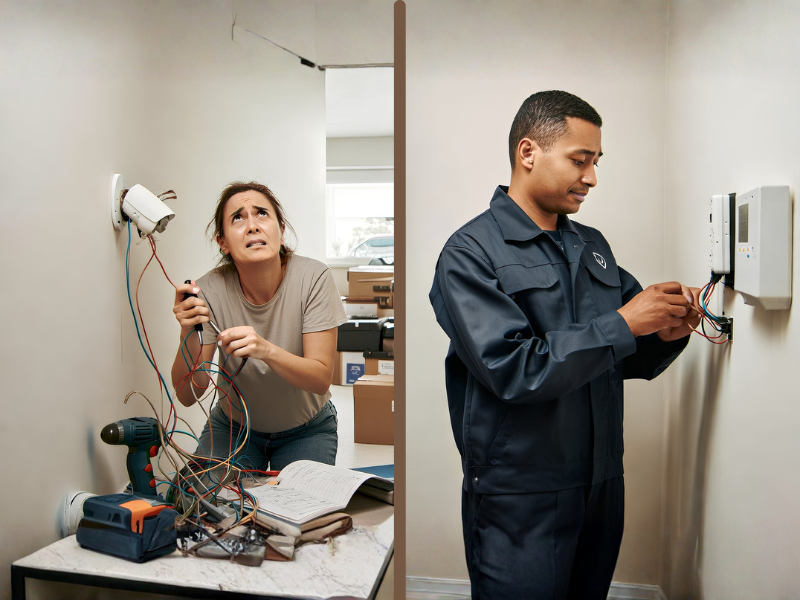
For Canadian homeowners, the decision to install a home security system often comes down to a fundamental choice: Do-It-Yourself (DIY) or Professional Installation?
While the initial appeal of a DIY system is its low upfront cost, a true head-to-head comparison reveals that the long-term value, reliability, and peace of mind offered by a professionally installed system often make it the more cost-effective and secure choice. This guide provides a transparent, Canadian-focused breakdown of the costs, hidden expenses, and long-term savings associated with both options.
The Upfront Cost Illusion: DIY vs. Professional
The most significant difference between the two options is the initial investment. However, focusing solely on the sticker price can lead to a false sense of savings.
DIY Installation: The Low Barrier to Entry
DIY systems are designed to be plug-and-play, appealing to the budget-conscious and the tech-savvy.
| Cost Component | Typical Canadian DIY Range | Notes |
|---|---|---|
| Equipment Kit (Starter) | $200 – $500 CAD | Includes a hub, 2-3 sensors, and a basic camera. |
| Installation Fee | $0 | Installation is done by the homeowner. |
| Monthly Monitoring (Self) | $0 – $15 CAD | Free self-monitoring or basic cloud storage fees. |
| Total Upfront Cost | $200 – $500 | This is the primary draw, but it often excludes necessary add-ons. |
Professional Installation: The Comprehensive Investment
Professional systems involve a security expert assessing your home, installing the equipment, and ensuring optimal functionality.
| Cost Component | Typical Canadian Professional Range | Notes |
|---|---|---|
| Equipment Cost | $350 – $1,500 CAD | Often subsidized or bundled with a monitoring contract. Includes higher-grade, ULC-certified equipment. |
| Installation Fee | $0 – $250 CAD | Often waived or heavily discounted with a monitoring agreement. |
| Monthly Monitoring (Pro) | $30 – $65 CAD | Includes 24/7 ULC-certified monitoring and cellular backup. |
| Total Upfront Cost | $350 – $1,750 | Higher initial cost, but includes expert labor and superior equipment. |
The Hidden Costs of DIY: Where the Savings Disappear
The true cost of a DIY system is often found in the expenses and risks that are not included in the initial purchase price. These "hidden costs" can quickly erode any perceived savings.
1. Installation and Placement Errors
With a DIY system, the homeowner is responsible for strategic placement. Incorrect sensor placement, poor camera angles, or failure to secure vulnerable areas (like basement windows) can create critical security gaps. This results in a false sense of security, which is the most dangerous hidden cost of all.
2. Equipment Quality and Longevity
DIY kits often use lower-grade, proprietary equipment with shorter warranties (typically 1 year). If a component fails after the warranty expires, the homeowner must purchase a replacement at full retail price. Professional systems use robust, commercial-grade equipment with longer warranties and are often replaced or repaired as part of the service contract.
3. Monitoring and Emergency Response
The biggest difference is the response protocol.
- DIY Self-Monitoring: If an alarm triggers, the alert goes only to your phone. If you are unavailable, in a meeting, or asleep, no one is dispatched. The responsibility to call 911 and verify the alarm falls entirely on you.
- Professional Monitoring: The alarm goes directly to a ULC-certified central station. Trained operators verify the alarm and immediately dispatch local police or fire services, ensuring a rapid, professional response.
4. Insurance and Fines
Insurance Discounts: Most Canadian insurance providers offer significant discounts (up to 20%) only for systems that are professionally installed and monitored by a ULC-certified company. DIY systems rarely qualify for these savings.
False Alarm Fines: DIY systems are prone to false alarms due to improper installation or user error. Many municipalities in the GTA, such as Toronto, issue fines for repeated false alarms, which can quickly add up.
Head-to-Head Comparison: Value vs. Price
To determine the best choice, it is essential to compare the long-term value and reliability, not just the initial price.
| Feature | DIY Installation | Professional Installation |
|---|---|---|
| Upfront Cost | Low ($200 - $500) | Moderate ($350 - $1,750) |
| Long-Term Cost | High (Hidden fees, replacement costs, no insurance discount) | Lower (Insurance savings, long-term warranties, no fines) |
| Equipment Quality | Consumer-grade, short warranty | Commercial-grade, long warranty |
| Installation Quality | Dependent on homeowner's skill (high risk of error) | Expert, optimized placement (minimal risk of error) |
| Emergency Response | Self-monitoring (homeowner calls 911) | 24/7 ULC-Certified Dispatch (immediate professional response) |
| Insurance Savings | Rarely qualifies | Qualifies for 10-20% discount |
| Liability & Risk | Higher risk of security gaps and false alarms | Lower risk, higher reliability |
The Canadian Homeowner's Verdict
For a small apartment or a renter who needs a temporary, portable solution, a DIY system may be a viable option.
However, for a Canadian homeowner looking to protect their long-term investment, family, and assets, the professional route offers superior value. The peace of mind, enhanced security features, and tangible financial benefits from insurance savings and avoided losses quickly justify the higher initial investment.
A professional security provider, like United Security, offers a customized solution tailored to the unique vulnerabilities of your home, ensuring that your system is a true asset, not a liability.
Ready to make the smart choice for your home security? Contact us at 1-800-466-3348 to speak with a security specialist today from United Security and get a free, no-obligation consultation.