 Canada

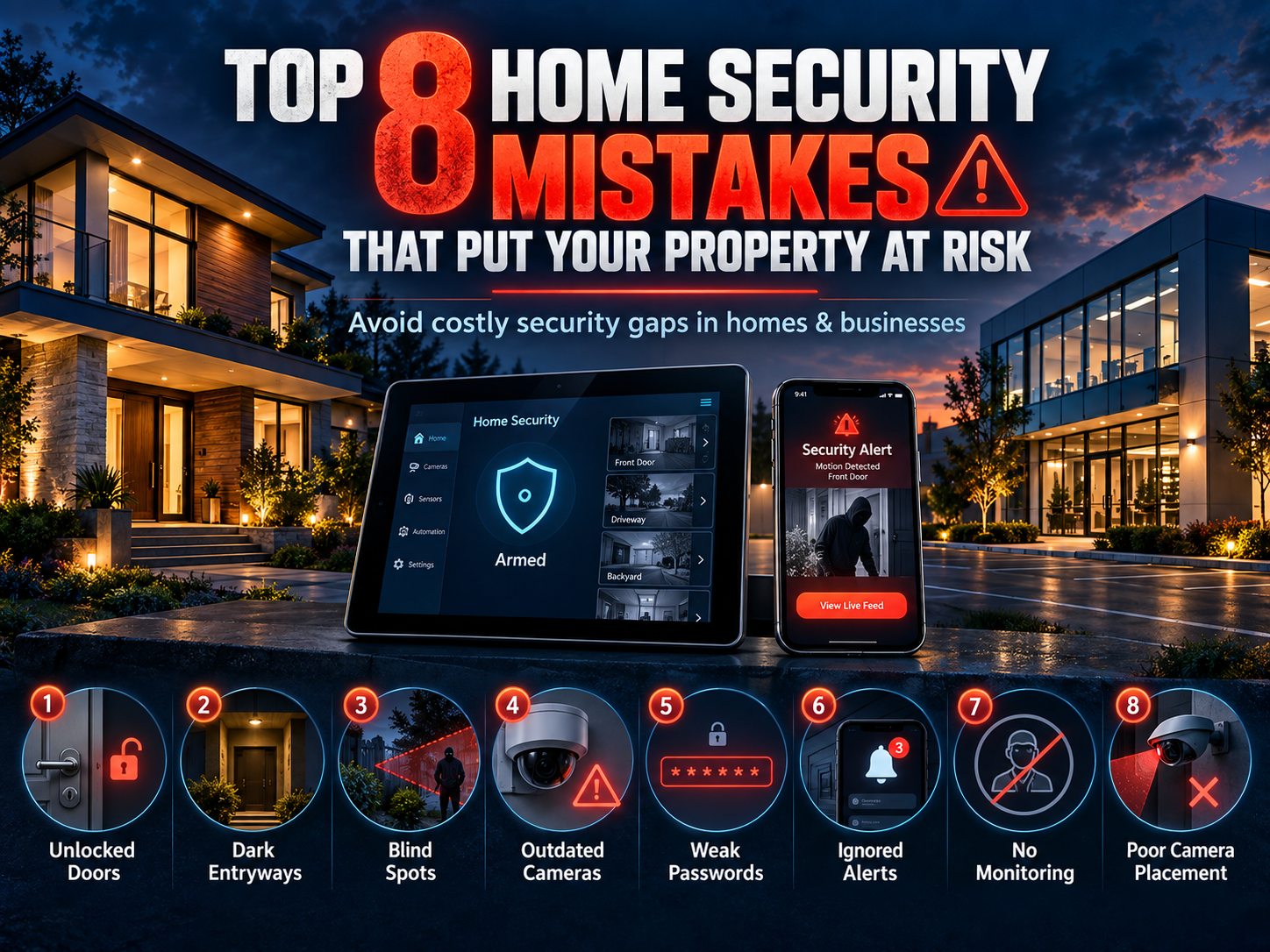
Most break-ins aren't the work of a criminal mastermind, they're the result of small, everyday oversights that make a property an easy target. Homeowners often assume a lock on the door and a camera by the porch is enough, but a handful of common home security mistakes can quietly undo even a decent setup. This guide covers the most frequent mistakes homeowners make and how to fix them.
Many of these gaps disappear entirely once a property is set up with one of the best home security systems built around monitoring, remote access, and proper coverage, rather than relying on habits alone.
1. Leaving Doors and Windows Unlocked
It sounds obvious, but unlocked entry points remain one of the single biggest home security mistakes homeowners make. A door left unlocked "just for a few minutes," or a ground-floor window cracked open for air, is exactly the kind of easy opportunity that makes a property an easy target.
Fix it: make locking up a non-negotiable habit, and consider smart locks that alert you if a door is left unlocked.
2. Hiding a Spare Key in an Obvious Spot
Under the mat, inside a fake rock by the front step, on top of the door frame, these hiding spots are so common that they're the first place anyone looking to break in will check.
Fix it: skip the hidden key entirely. A coded lockbox or a smart lock with temporary access codes is far more secure than any hiding spot.
3. Advertising an Empty House
Leaving curtains open at night with the lights off, letting mail and packages pile up, or posting vacation photos on social media in real time all send the same signal: nobody's home. This is one of the most common home security mistakes, and one of the easiest to fix.
Fix it: use light timers or smart lighting to mimic normal activity, pause mail delivery, and save vacation posts for after you're back.
4. Leaving Valuables and Packaging in Plain Sight
Leaving a new TV or laptop box out by the curb, or valuables visible through a front window, tells anyone walking by exactly what's inside, and that it's worth breaking in for.
Fix it: break down boxes before putting them out, and keep expensive items out of direct view from windows.
5. Poor or Static Outdoor Lighting
A dark property is an easy one to approach unnoticed, but oddly, lights left on the same way every night aren't much better; they create predictable shadows and patterns that don't actually signal activity.
Fix it: install motion-activated lighting at entry points, it deters more effectively than static lighting left on a fixed schedule.
6. Neglecting the Garage
The garage is one of the most overlooked entry points into a home. An unlocked garage door, or an unsecured door connecting the garage to the house, gives easy access that many homeowners simply don't think to check.
Fix it: keep the garage door closed and locked at all times, and secure the interior garage-to-house door just as carefully as the front door.
7. Relying on a System Without Monitoring
Having cameras and sensors installed is a good start, but if no one, or nothing, is actively watching for alerts, a lot can slip through the cracks. Homeowners can't realistically monitor every notification 24/7 on their own.
Fix it: pair your equipment with 24/7 professional monitoring so alerts are acted on immediately, not just recorded for later.
8. Skipping Regular System Checks
A security system that's installed and forgotten tends to develop quiet gaps over time, dead batteries, outdated firmware, cameras knocked out of position, none of which get noticed until something goes wrong.
Fix it: test your alarm, cameras, and sensors every few months, and review the system fully before extended trips away from home.
Why These Mistakes Add Up
Individually, each of these might seem minor. Together, they create a pattern that's easy for an opportunistic intruder to spot and exploit, an unlocked window, a predictable light schedule, an unmonitored alarm. The good news is that every mistake on this list has a straightforward fix, and most of them cost little to nothing to correct.
Final Verdict
Avoiding these common home security mistakes comes down to consistency: locking up every time, keeping visible signals of activity even when you're away, and making sure your equipment is actually monitored and maintained, not just installed. The best home security systems are designed to close these exact gaps automatically, so protection doesn't depend on remembering every habit perfectly.
At United Security, we help homeowners across the GTA identify these vulnerabilities and build a security setup, monitoring, cameras, and access control working together, that removes the guesswork.
Want to close these security gaps for good? Contact us at 1-800-466-3348 to speak with a security specialist today from United Security and get a free, no-obligation consultation.