 Canada
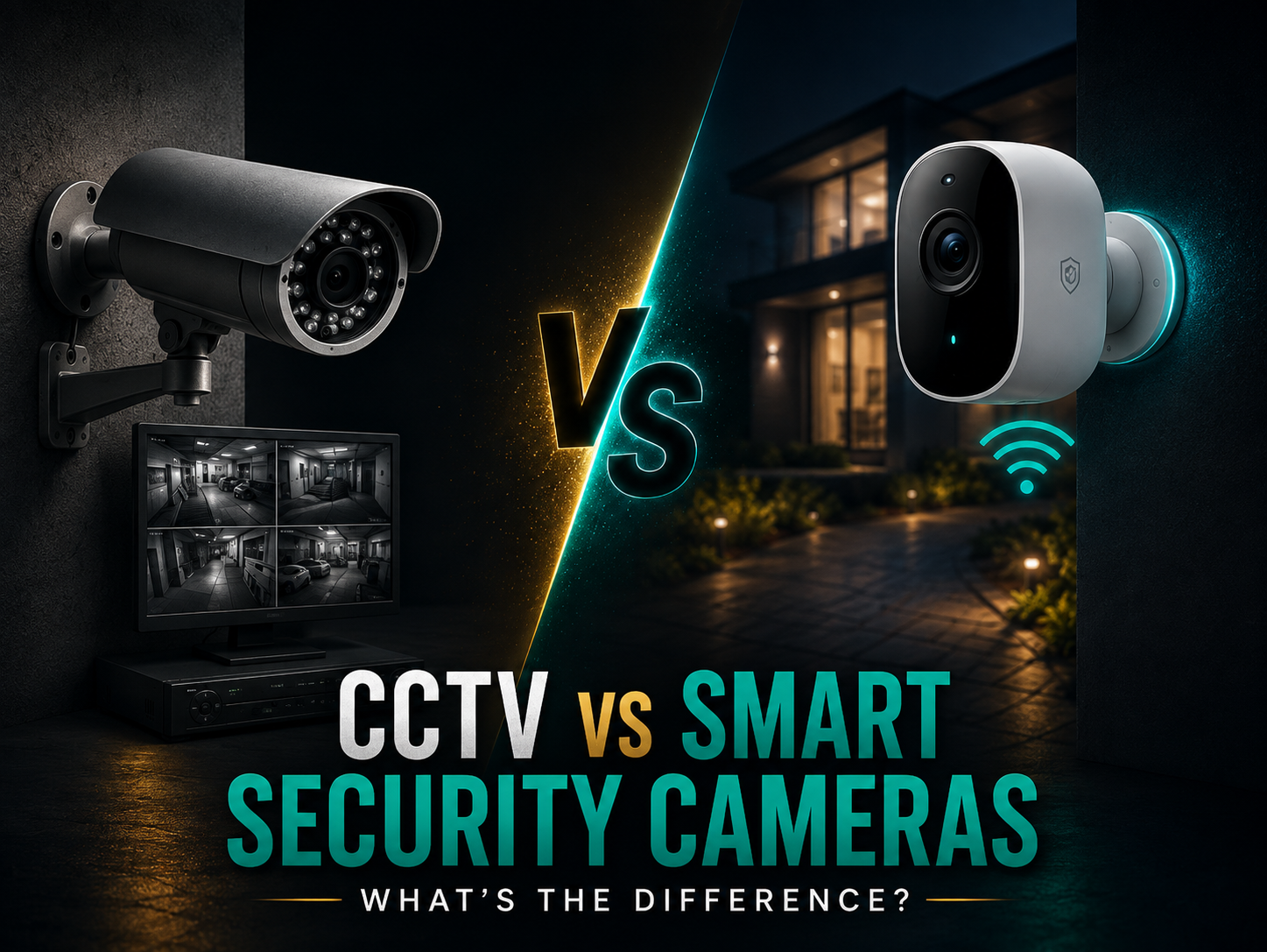
Walk into any electronics store or search online for security cameras, and you'll run into two very different worlds: traditional CCTV systems and newer smart security cameras. Both promise to protect your home or business, but they work in fundamentally different ways, and picking the wrong one for your property can leave gaps in your coverage or cost you more than it should.
This guide breaks down exactly how CCTV and smart security cameras differ, so you can choose the system that actually fits your property.
What Is a CCTV System?
CCTV stands for "closed-circuit television." It's the traditional camera setup most people picture when they think of security footage: cameras connected by cables to a central recorder, usually a DVR (Digital Video Recorder), with footage viewed on a dedicated monitor or TV.
Key characteristics of CCTV:
- Wired connections between cameras and the recorder
- Footage stored locally on a hard drive or DVR, not the cloud
- A closed, self-contained system, not connected to the internet by default
- Typically installed by a professional
- Built for continuous, reliable recording over long periods
What Is a Smart Security Camera?
Smart security cameras (also called IP or "internet protocol" cameras) connect to your home or business Wi-Fi network and send footage over the internet, either to the cloud or a local storage device, so you can view it remotely from a smartphone app.
Key characteristics of smart cameras:
- Wireless setup, often installable without a professional
- Footage stored in the cloud, on an SD card, or both
- Real-time alerts sent straight to your phone
- Built-in smart features like motion detection, person/package recognition, and two-way audio
- Easy integration with smart home or business systems
CCTV vs Smart Security Cameras: Side-by-Side Comparison
| Factor | CCTV | Smart Security Cameras |
|---|---|---|
| Connection | Wired | Wireless (Wi-Fi) |
| Footage storage | Local DVR/hard drive | Cloud, SD card, or both |
| Remote viewing | Limited or none by default | Yes, via smartphone app |
| Real-time alerts | No | Yes |
| Installation | Usually professional | Often DIY-friendly |
| Reliability | Very high, not dependent on internet | Dependent on Wi-Fi and power |
| Video quality | Can vary, often lower resolution | Typically higher resolution (HD/4K) |
| Smart features (AI detection, integrations) | Limited | Extensive |
| Vulnerability to tampering | Cutting a cable disables it | Losing Wi-Fi or power disables it |
| Best for | Large properties, warehouses, retail stores | Homes, small offices, remote monitoring needs |
When CCTV Still Makes Sense
Despite being the "older" technology, CCTV isn't obsolete. It's often still the better choice for:
- Large commercial properties or warehouses that need dozens of cameras running continuously
- Properties with unreliable internet, since CCTV doesn't depend on a Wi-Fi connection to keep recording
- High-security environments where a closed, non-networked system reduces the risk of remote hacking
- Businesses that need extended local storage without relying on cloud subscriptions
When Smart Security Cameras Make Sense
Smart cameras have become the go-to choice for most homes and many small businesses because of:
- Remote access, checking your property from anywhere, anytime
- Real-time alerts for motion, people, or package detection
- Easier installation, often without needing a technician
- Integration with smart locks, alarms, and voice assistants
- AI-powered features like facial recognition and smart notifications that reduce false alarms
Can You Combine the Two?
Yes, and many modern security setups do exactly that. It's increasingly common to use CCTV for constant, high-reliability recording in critical areas (like a warehouse floor or server room) while adding smart cameras at entry points for remote monitoring and instant alerts. This hybrid approach gets the reliability of CCTV with the convenience of smart technology.
Which One Is Right for You?
- Homeowners: smart security cameras are usually the better fit, offering remote access and easy setup without complex wiring
- Small businesses: a mix of smart cameras at entrances and CCTV in high-traffic or high-value areas offers the best balance
- Large commercial or industrial properties: CCTV remains a strong foundation, especially when paired with select smart cameras for flexibility
- Properties in areas with unreliable internet: CCTV's independence from Wi-Fi makes it the more dependable option
Final Verdict: Which is Best for You?
Neither CCTV nor smart security cameras are universally "better" — the right choice depends on your property size, internet reliability, and how much remote access and automation you actually need. Many properties today benefit most from a hybrid setup that uses each technology where it performs best.
At United Security, we help homeowners and businesses across the GTA design camera systems that combine the right mix of reliability and smart features for their specific property, not a one-size-fits-all package.
Not sure which camera system fits your property? Contact us at 1-800-466-3348 to speak with a security specialist today from United Security and get a free, no-obligation consultation.