 Canada

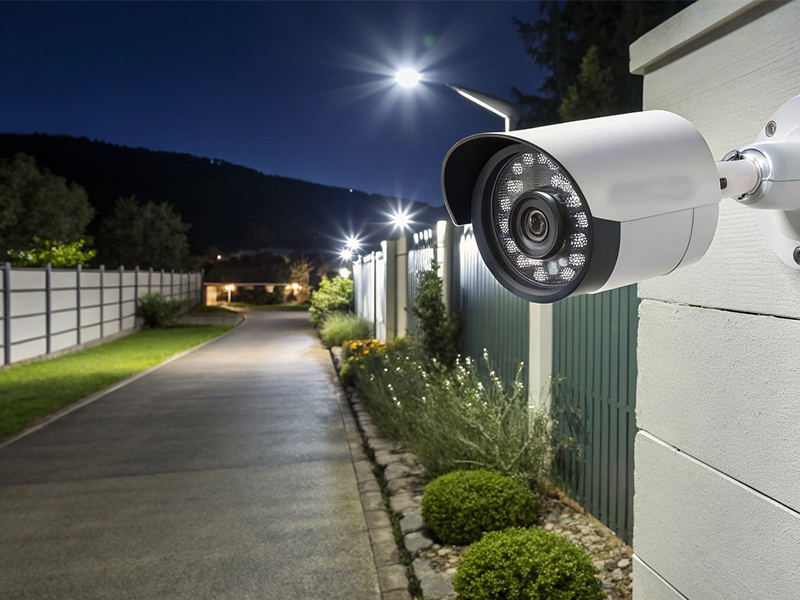
Protect your property in the dark with night vision security cameras that capture clear footage in low-light conditions, keeping criminals at bay. Whether you're securing a home, business, or remote site, a good night vision security camera can make all the difference when daylight disappears. This guide walks you through everything you need to know before buying and installing night vision outdoor security cameras for home or commercial use.
How Do Night Vision Security Cameras Work?
Night vision security cameras rely on two main technologies to "see" in the dark: infrared (IR) illumination and low-light image sensors.
Most night vision CCTV camera outdoor security systems use powerful IR LEDs that emit light invisible to the human eye (typically 850nm or 940nm wavelength). The camera's sensor detects the reflected IR light and converts it into a visible black-and-white image.
Some newer models combine IR with color night vision using large image sensors and built-in spotlights (often called "ColorVu," "ColorX," or "full-color night vision"). These provide color images at night but require some ambient light or the camera's own white LEDs.
Starlight sensors represent the latest advancement. They capture color images in near-total darkness (as low as 0.001 lux) without any IR or spotlight, ideal for discreet monitoring.
Night Vision Cameras vs. Standard Cameras — Updated Comparison Table
| Category | Night Vision Cameras | Standard Cameras |
|---|---|---|
| IR Illumination | Built-in IR illuminators with long-distance range (20–200+ meters) for clear visibility in darkness | Little to no IR illumination; limited to whatever light is available |
| Sensor Size | Larger image sensors (1/1.8", starlight-grade) for enhanced low-light sensitivity | Smaller sensors (1/2.8" or lower) with weaker night performance |
| Light Sensitivity Technology | Uses back-illuminated sensors or starlight sensors for maximum brightness in low light | Standard front-illuminated sensors that struggle in dark environments |
| Day/Night Mode Switching | Equipped with auto IR-cut filters that switch between daytime color mode and nighttime black-and-white clarity | Usually fixed filter designs; not optimized for accurate night switching |
| Dynamic Range Performance | Wider Dynamic Range (WDR) handles glare from car headlights, streetlights, and reflective surfaces | Lower dynamic range; nighttime glare causes washed-out or unusable footage |
| Night Vision Clarity | Provides highly detailed footage even in near-zero light; often includes color night vision | Night footage is often grainy, blurry, or nearly black |
| Reliability in Outdoor Environments | Ideal for night vision CCTV camera outdoor security, and dimly lit properties | Only reliable in daylight or well-lit spaces |
| Use in Remote Locations | Excellent for farms, barns, rural homes, vacation houses, and construction sites | Not suitable for unlit outdoor or remote environments |
| Wireless Night Monitoring | Perfect for outdoor wireless security cameras with night vision, great for users who avoid running cables | Wireless models provide basic coverage but fail in pitch-black conditions |
What Features Should You Look for in a Night Vision Camera?
Choosing the right night vision security camera requires matching features to your specific needs.
Key Features to Look For:
Resolution: Aim for 1080p minimum, but 2K or 4K offers much better clarity for identifying faces/plates.
Night Vision Type:
Infrared (IR): Standard, uses LEDs for clear black & white images in total darkness (e.g., 100ft+ range).
Color Night Vision: Uses spotlights or starlight sensors for full-color video in low light, better for detail but needs some ambient light.
IR Range: Crucial for outdoor coverage; 100 feet (30m) is good for yards, more for larger properties.
Field of View (FoV): Wide-angle sees more area; narrower FoV offers more detail on entryways.
Weatherproofing: Look for IP66 or higher for outdoor resilience against rain, dust, etc.
Smart Detection: AI-powered person/vehicle/animal detection reduces alerts from trees/pets.
Storage: Cloud, local (SD card, NVR), or hybrid options.
Tips for Installing Night Vision Cameras
Position Cameras in Strategic Locations
Proper placement is critical for getting clear nighttime footage. Install cameras near entry points, driveways, garages, and other high-activity spots. Mounting them around eight to twelve feet high helps prevent tampering while still giving a wide, clear view of the area.
Keep the Field of View Clear
Night vision relies heavily on an unobstructed sightline. Avoid placing cameras behind branches, fences, walls, or décor that may block the lens. Even small obstructions can create blind spots or interfere with IR illumination, reducing nighttime visibility.
Use Minimal Ambient Lighting
Although night vision technology works in darkness, a bit of ambient light greatly improves clarity. Light from porch lamps, streetlights, or solar fixtures helps the camera reduce noise and capture sharper details. Even low-level light can enhance overall image quality.
Choose Weatherproof Outdoor Models
Outdoor cameras must withstand dust, rain, humidity, and temperature changes. Selecting devices with IP65 or higher ratings ensures they remain durable in harsh conditions. Weatherproof housing also prevents internal damage that could affect night vision performance.
Adjust Angles to Prevent Glare
Bright lights can ruin night footage by causing glare or overexposure. Avoid pointing cameras directly at headlights, streetlights, windows, or reflective surfaces. Angling the camera slightly downward helps protect the lens from harsh light and preserves IR clarity.
Test Cameras Before Final Placement
Always test both day and night performance before permanently mounting the camera. Check the live feed in daylight, then again in complete darkness to evaluate IR range and motion detection. Walking through the monitored area helps identify blind spots that should be corrected.
Secure Wiring and Connections
Wired systems need protected cabling to avoid weather damage or tampering, so run cables through conduits or along secure surfaces. Wireless cameras depend on strong Wi-Fi, so ensure the signal is stable enough for smooth video streaming and nighttime alerts.
Integrate With Your Security System
Night vision cameras work best when connected to other security devices. Integrating them with alarms, sensors, and smart home systems creates stronger protection. This gives you better awareness of activity around your property and faster response options.
Perform Regular Maintenance
Dust, dirt, insects, and moisture can all reduce night vision quality. Cleaning the lens regularly and inspecting the housing ensures the camera stays effective. Firmware updates also help maintain performance and fix any security or software issues.
Check Local Laws and Regulations
Before installing cameras outdoors, make sure your setup follows local privacy rules. Some neighborhoods restrict where cameras can point or how much public space they can cover. Checking regulations helps you avoid conflicts and stay compliant.
How to Maintain Your Night Vision Camera
Regular maintenance helps your night vision camera deliver clear, reliable footage and prevents performance issues over time. Following a structured schedule keeps the camera working efficiently in all lighting conditions.
Weekly Maintenance
Inspect the lens and housing: Check for dust, fingerprints, or debris that may blur the image. Clean the lens gently with a microfiber cloth to maintain sharp nighttime visibility.
Check the power supply: Make sure cables are connected firmly and the camera is receiving stable power without flickering or interruptions.
Test low-light performance: View the camera feed in dim light to confirm the infrared feature activates and produces clear footage.
Monthly Maintenance
Clean the surrounding environment: Trim branches, remove cobwebs, and clear anything that might block the view or cause unnecessary motion alerts.
Review stored recordings: Look through recent footage to ensure video quality is consistent and that cloud or local storage is functioning properly.
Inspect mounting hardware: Examine brackets, screws, and joints to confirm nothing has loosened from wind, vibration, or weather changes.
Quarterly Maintenance
Check infrared LED performance: Make sure the IR lights are illuminating the area evenly and are not dimming over time. Poor LEDs can weaken night vision clarity.
Update the system software: Install any firmware or app updates from the manufacturer to enhance features, fix bugs, and boost security.
Yearly Maintenance
Perform a complete physical inspection: Look over cables, connectors, and the outer casing for cracks, corrosion, or wear that could affect performance.
Re-adjust the camera angle: Weather changes, vibrations, or other factors may shift the camera. Reset it to the ideal viewing position.
Consider professional servicing: Have a technician evaluate the camera and system to catch issues you might miss and ensure long-term reliability.
Final Thoughts
Investing in the right night vision security camera eliminates the biggest weakness in most security systems — darkness. Criminals prefer to operate unseen, but a properly chosen and installed night vision CCTV camera outdoor security system removes that advantage.
Take time to assess your property's unique lighting conditions, entry points, and budget. Whether you choose a high-end PoE system or convenient outdoor wireless security cameras with night vision, the peace of mind from clear nighttime footage is worth it.
Your property deserves protection 24 hours a day. Make sure your cameras can actually see when the sun goes down.
Ready to secure your property? Contact 1-800-466-3348 to speak with a security specialist today and get a custom quote for your night vision camera installation.